Vacaville, CA · Garage Door Service
Is Your Vacaville Garage Door Worth Fixing, or Done
Vacaville homes mostly date to the 1980s and 90s. Here's how the mild local climate and that housing stock change the repair-vs-replace math on an older door.
- Repairs & new doors
- Springs & openers
- Serving 4 nearby communities
What the Weather Here Does to It
Vacaville sits in a mild temperate band, and that matters more than most homeowners realize when they're deciding whether to sink money into an old door. You're not dealing with the freeze-thaw cycle that cracks panels and seizes torsion springs in colder climates, and you're not fighting road salt eating through cables and hinges. That buys a door more years than it would get elsewhere. What still gets a door here is sun and heat cycling on the track and the opener's electronics - UV breaks down weatherstripping and plastic idler pulleys over time, and repeated warm-day expansion loosens track bolts gradually rather than suddenly. So the failure pattern in this area tends to be slow wear rather than storm damage or ice-locked rollers. If your door is sticking or scraping, it's usually a track that's drifted out of alignment over years of thermal cycling, not a single bad night. That's actually good news for repair - it's a mechanical fix, not a structural one, and the mild conditions mean the rest of the door's hardware is probably in better shape than its age alone suggests.
Leaving It Alone
A lot of the housing in this area went up between 1974 and 2002, with the median Vacaville house built around 1983, and that era of door hardware is a specific animal. If your door and opener are original to a house from that window, you're likely looking at a torsion spring sized for a lighter, older-style panel and an opener from a generation before today's safety sensors and rolling codes. Leaving a worn spring or a loose cable alone on a door that age isn't neutral - it's how you end up with a snapped spring and a door that won't move, usually at the worst time. The parts themselves aren't exotic; springs and cables get replaced on doors this age all the time and it's a reasonable job. What gets expensive is waiting until the track has bent from running on a bad roller, or until the opener's motor has burned out trying to lift a door that's lost spring tension. If the door is from that original 1980s-90s stock and otherwise sound, fixing the hardware now is usually cheaper than fixing it after something gives.
When to Get Help
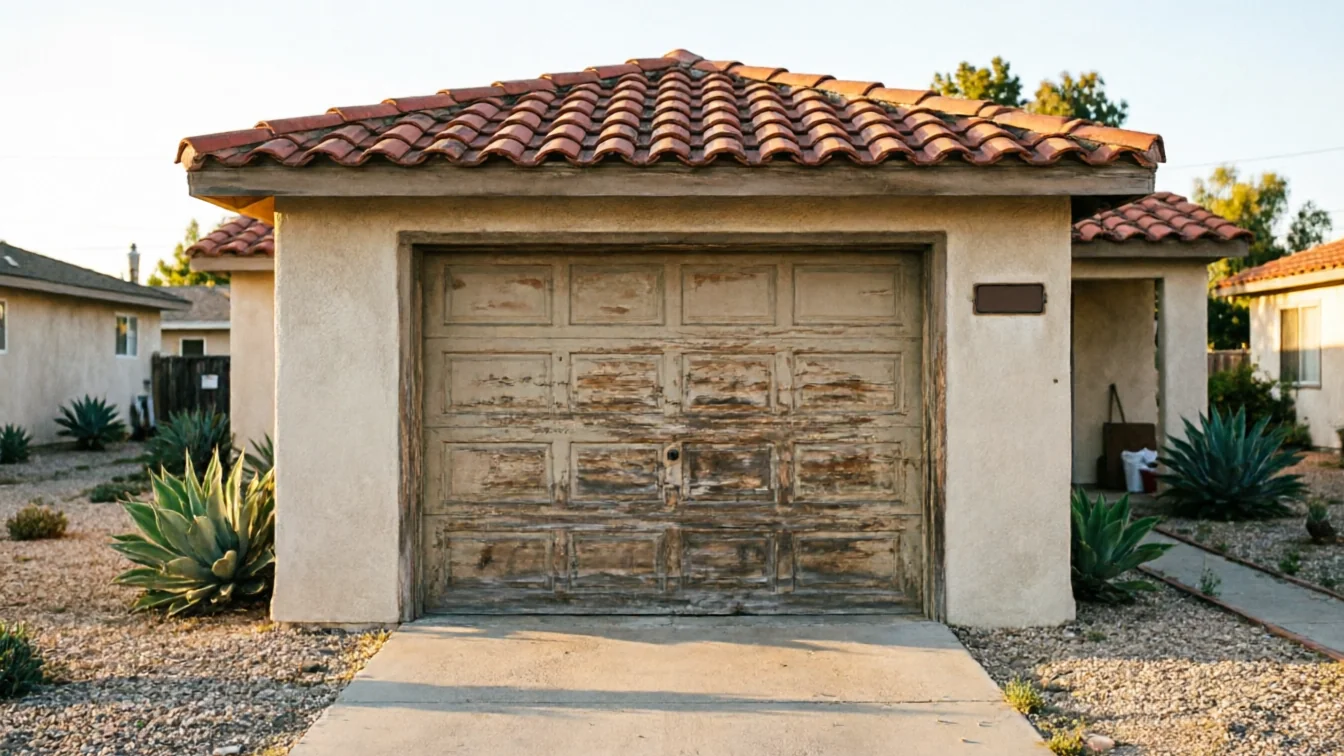
If a door built in that 1970s-through-1990s wave is sagging unevenly, scraping one side of the track, or the opener strains and groans before it moves, that's worn spring tension or a track that's walked out of alignment - both fixable, both worth calling about before they get worse. A door that reverses on its own partway up, or drops faster than it used to, has lost spring balance and shouldn't be run until that's addressed; a spring under load is not something to troubleshoot yourself. On the other side, if the panels themselves are warped, delaminated, or the steel has rusted through at the bottom corners, that's a door problem, not a hardware problem, and no amount of spring or track work fixes it. We'll tell you straight when a door's frame is the issue rather than selling you a repair that won't hold. Given how much of the area's housing sits in that same 1980s-to-90s build window, this split - hardware fixable, panel not - comes up constantly, and it's usually obvious once someone's looked at the door in person rather than guessed from a phone description.
What Is Going On
Across the roughly 19,366 owner-occupied houses in this service area, most sitting in that 1974-2002 build window, the doors we get called to are rarely failing for one dramatic reason. It's cumulative: a torsion spring that's done its 10,000-cycle life, nylon rollers that have worn oval instead of round, a cable strand that's frayed from years of running over the same drum groove. None of that is specific to a bad door - it's just what happens to hardware that's been quietly doing its job since the 1980s or 90s without anyone checking it. The honest limitation here: if the door itself - the panel sections - is original to a house from that era, finding an exact match panel can take time, since manufacturers don't keep every old profile in stock. In that case we're usually matching as close as possible or recommending replacement of the full door rather than chasing a part that's been discontinued. For hardware - springs, cables, rollers, openers - none of that is a problem; it's a normal repair on a normal, common-age Vacaville door.
Frequently asked questions
Is it worth fixing a garage door from the 1980s instead of replacing it?
Usually, yes, if the panels themselves are straight and not rusted through. Vacaville's mild climate is easy on steel and springs, so hardware from that era - torsion springs, cables, rollers, openers - is almost always a reasonable repair rather than a reason to replace the whole door.
Why does my older door sag on one side?
On a door from the 1974-2002 build era common here, that's usually a torsion spring that's lost tension unevenly or a track that's drifted out of alignment over years of thermal cycling. It's a hardware fix, not a sign the door itself is bad.
Does Vacaville's climate make garage doors last longer?
The mild temperate conditions here mean you skip the freeze-thaw damage and road salt corrosion that wear out doors faster elsewhere. Wear still happens, just slower and more from sun and heat cycling than from weather events.
When should I stop repairing an old door and replace it?
When the panel steel itself is warped, delaminated, or rusted through at the bottom, repair won't hold - that's a structural issue, not a hardware one. If it's springs, cables, rollers, or the opener, repair almost always makes more sense first.
Related garage door services in Vacaville
More garage door guides
Book garage door service in Vacaville
Call now or request a quote - tell us what the door is doing and where you are.